

Take Off Your Shoes and Join in The Douro Grape Harvest
The Douro grape harvest is possibly one of the best times of year to visit this remarkable wine region.
Especially if you take part in picking the grapes and treading them with your bare feet.
Picking grapes
Specifics vary between wineries but if you participate in a grape harvest programme, you will most likely start by going to the vineyards where real grape pickers are already hard at work. You may be given a straw hat to wear, as well as a pair of secateurs and a plastic tray. As you fiddle with bunches of juicy fat grapes and decide where to snip, don’t be dismayed as the local experts rapidly disappear down their line of vines. They’ve had years of practice.

douro-grape-harvesting
Vineyard lunch
Since it’s not your job to fill tray after tray of grapes each day, you’ll soon be able to relax, tour the winery and enjoy lunch at the vineyard before doing any more ‘hard work’. This will undoubtedly be accompanied with delicious Douro wine and port wine.

Picnic lunch
Treading grapes
Apart from drinking the wine, the most memorable part of the experience has to be the grape treading. These days, most wineries crush most if not all of their grapes by machine. However, for special wines, the more delicate procedure of treading by foot makes a significant difference to the flavour of the wine. No matter how hard you stomp, your foot, unlike the machinery, will not crush the seeds so their bitter flavour won’t taint the fermenting juice.
Grapes need retreading every few hours while they ferment, otherwise the batch will be ruined. Although most visitors only spend a short time (up to an hour) working the tanks, treading must be repeated every few hours, day and night, over a period of days (not by you, of course) until the winemaker declares the wine ready for the vats.
After donning a pair of shorts and washing and sterilising your legs and feet, you will climb into a tank of cool, lumpy purple liquid. To crush grapes, they need to be under your feet. To get them there, you’ll need to raise your knees fairly high as you step forward, which can get tiring after a while. The good news is that the seeds have an exfoliating effect so by the time your work is done your feet and legs should feel beautifully smooth, albeit purple-tinged.
At this point, you can celebrate the experience with another glass of Douro wine from a previous vintage, knowing that in the years to come, people will be drinking wine that you had a hand, and foot, in making.
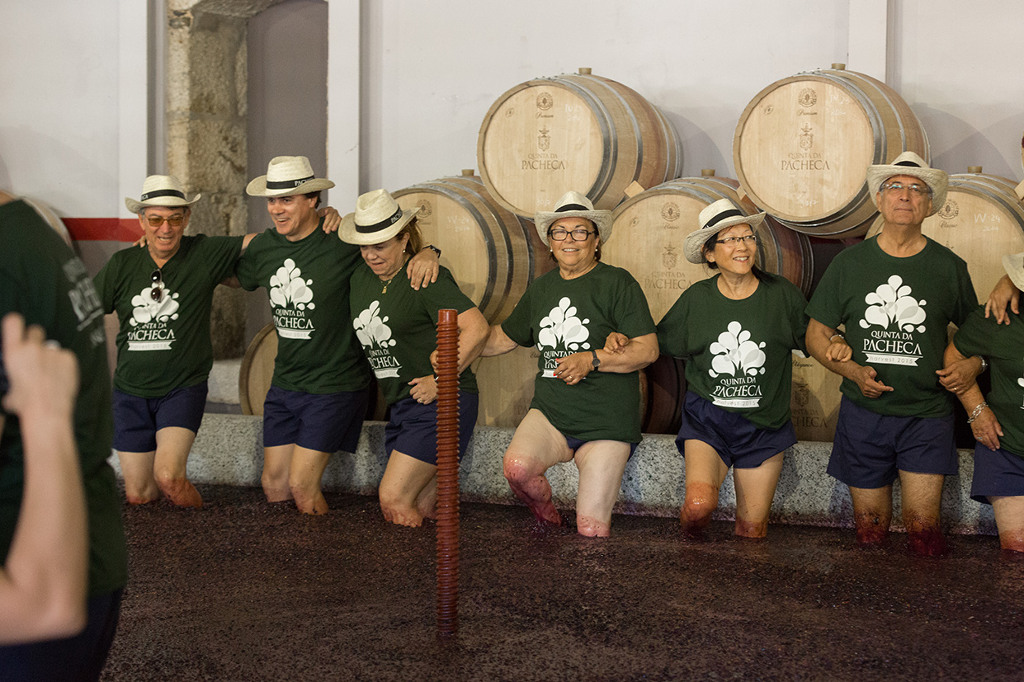
Treading grapes in the Douro Valley
Harvest time in the Douro
Whether you get involved in the harvest activities or not, if you visit the area while it’s in progress, you’ll see trucks laden with grapes travelling between vineyards and the wineries and groups of workers bent over vines, loading or unloading trucks, taking breaks in the shade or waiting to be picked up at the start or end of the day.
The exact dates of the Douro grape harvest always depend on weather conditions both during the growing season and in mid to late September, when the grapes are usually ripe and ready to be picked.